
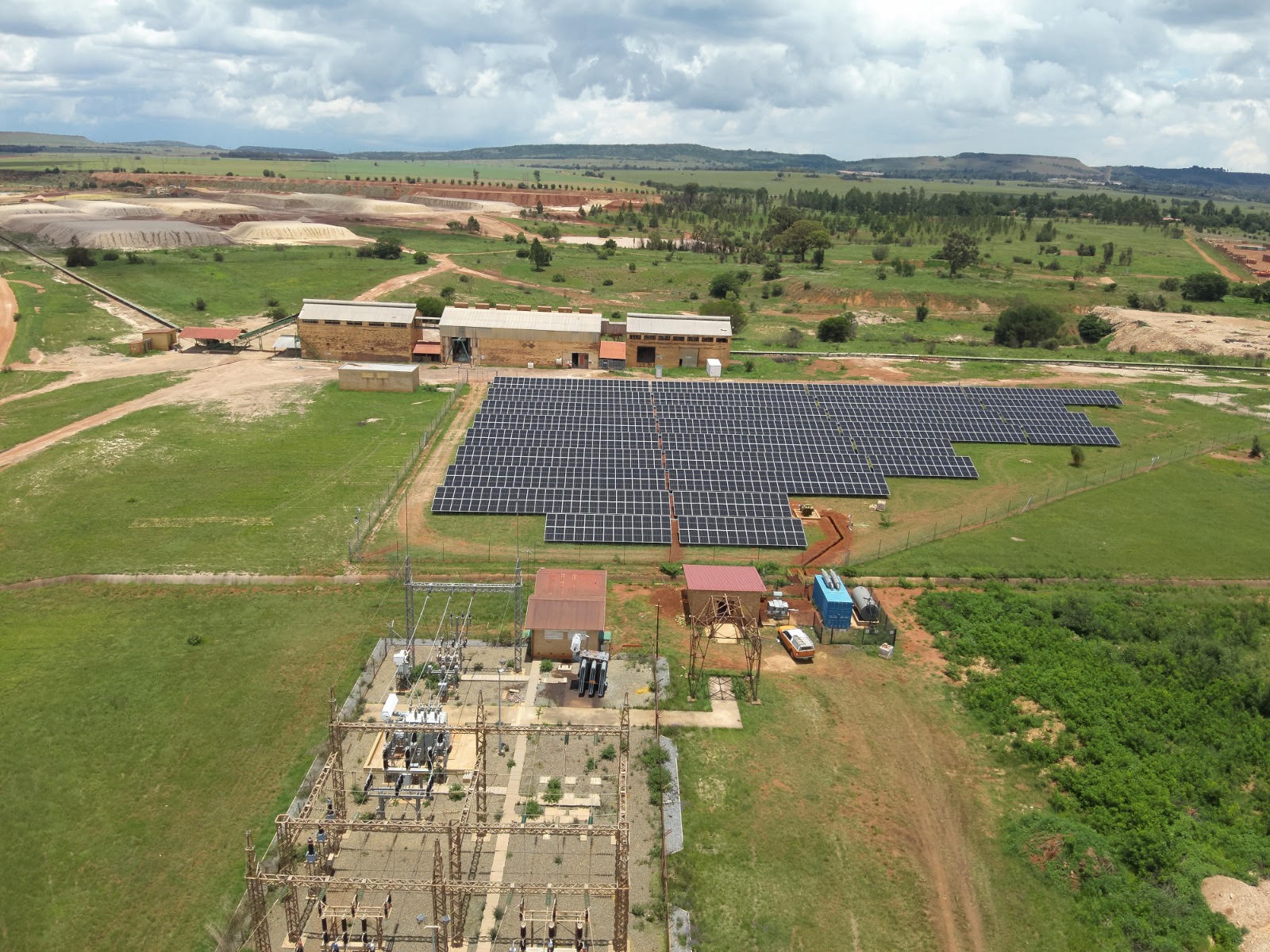
“Photo provided by Corobrik”
The oldest solar industry in South Africa
Long before the first photovoltaic panel was bolted to a factory roof, South African brickmakers were harnessing the sun. For generations, green clay bricks have been laid out in open-air hacklines to dry in the sun and wind before firing. In many ways, the clay brick industry was one of the country’s first solar industries.
Today, that relationship with the sun is entering a new chapter. Across South Africa, members of the Clay Brick Association of South Africa (CBA) are installing solar photovoltaic (PV) systems to power their factories, protect themselves against rising energy costs, and reduce the carbon footprint of every clay brick they produce.
Solar across CBA member plants
Ten CBA member plants have already made the move to solar:
- Worcester Bricks
- Viva Bricks
- Rosema Bricks
- Nylstene
- Makana Bricks
- Langkloof Bricks
- Klay
- Johnson Bricks
- Cabrico
- Corobrik
They range from large multi-plant manufacturers to independent regional producers, spread across several provinces. Solar is proving a practical fit for clay brick factories of every size.
Using solar alone, without battery storage, many factories can supply approximately 30% of their electricity needs from the sun. That figure is honest and realistic: solar only generates in daylight, while several electrical loads at a clay brick factory, such as kiln and dryer fans, run around the clock.
Pegging the cost of power
The strongest business case for solar is price certainty. Once a solar system is paid for, or contracted under a fixed-escalation power purchase agreement, the cost of each kilowatt-hour it produces is largely locked in for the 20 to 25-year life of the panels. Grid electricity offers no such certainty.
Eskom tariffs have risen well above inflation for more than a decade, and further above-inflation increases are already approved for the years ahead. Even those approvals are not fixed: in 2026 the National Energy Regulator of South Africa (NERSA) revised Eskom’s approved increases upwards.
Grid electricity can only be expected to keep getting more expensive. The cost of solar, once installed, is fixed.
A factory supplying about 30% of its electricity from solar shields that share of its consumption from every future Eskom increase. Only the grid-supplied portion is exposed, which softens the impact of each tariff hike on the cost of production.
Why this matters to the consumer
Energy is one of the largest controllable costs in clay brick manufacture. When a manufacturer pegs part of that cost, it is better placed to hold its prices steady. That stability flows down the value chain to merchants, contractors, developers and homeowners at a time when building costs across the board continue to rise. Solar helps keep clay brick one of the best-value building materials in South Africa.
A cleaner alternative to diesel generators
During years of load-shedding, many factories relied on diesel generators to keep production running. Diesel remains expensive and volatile, with sharp month-to-month swings driven by global oil prices, the exchange rate and international supply disruptions. Over the past year, the price of diesel in South Africa has risen substantially.
At typical generator efficiencies of around 3 to 4 kWh per litre, diesel-generated electricity costs roughly R8 to R10 per kWh in fuel alone, several times the Eskom tariff, before maintenance and generator wear are counted. Every kilowatt-hour a factory generates from the sun is one it does not have to buy from Eskom or make from diesel.
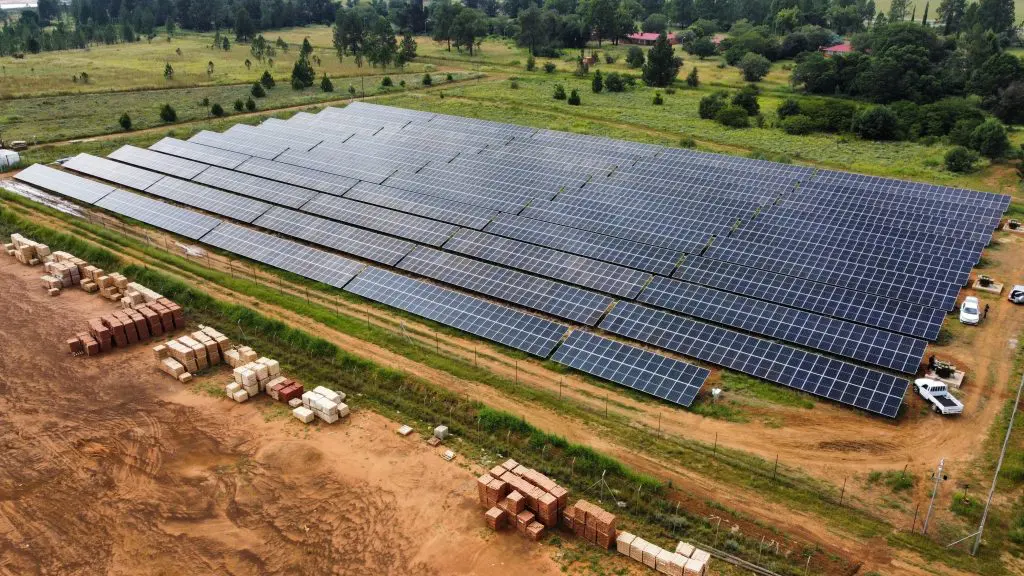
“Photo provided by Corobrik”
Matching production to the sun
Clay brick manufacture suits solar well because much of the electrical load can be scheduled. Many factories shift energy-intensive activities, such as clay preparation, extrusion, cutting and setting, into daylight hours so that they run directly on solar power. This maximises the share of solar energy used on site and reduces the need for batteries.
Where a factory cannot shift its load to match the sun, excess solar power need not be wasted. Under NERSA’s net-billing rules, approved in December 2024, customers can apply to Eskom or their municipality to export surplus electricity to the grid. Exported energy earns a credit on the customer’s bill, calculated within each time-of-use period. Solar generated on a weekend or during a production stoppage can therefore still reduce the factory’s electricity account.
Roofs and land already on site
Clay brick factories are well placed to host solar. Drying sheds, product warehouses and workshops offer large, unshaded roof areas close to the electrical loads they serve. Some sites also have worked-out quarry areas or other disturbed land that can accommodate ground-mounted arrays without taking productive land out of use.
Thermal energy and electrical cost
It is important to be clear about what solar can and cannot do. Firing clay bricks in a kiln is a thermal process, and thermal energy accounts for the predominant share of the energy used to make a clay brick. Solar PV addresses the electrical share.
However, energy use and energy cost are not the same thing. Electricity drives the machinery that wins and prepares the clay, extrudes and cuts the bricks, moves air through dryers and kilns, and handles the finished product. Eskom electricity therefore represents a very large portion of a clay brick manufacturer’s energy bill, which is why solar makes such a meaningful difference to the cost of production. Improving kiln efficiency remains the next frontier, building on the CBA’s earlier work in the Energy Efficient Clay Brick project.
Lower emissions and carbon credits
South Africa’s grid remains among the most carbon-intensive in the world. The Department of Forestry, Fisheries and the Environment’s 2024 Grid Emission Factors Report, gazetted on 11 September 2026, sets the National Generation Grid Emission Factor at 0.960 tonnes of CO₂-equivalent per megawatt-hour, up from 0.906 in 2023. The grid became more carbon-intensive in 2024, so each kilowatt-hour of solar now displaces more emissions than before.
In practical terms, every megawatt-hour of solar electricity generated avoids nearly one tonne of CO₂-equivalent. A factory using 3,000 MWh of electricity a year and supplying 30% of it from solar would avoid about 860 tonnes of CO₂-equivalent annually.
Carbon credit group schemes
Solar generation also creates a tradable asset. Group or aggregation schemes are available that register many smaller solar systems together, verify the clean energy they produce, and issue renewable energy certificates or carbon credits against it. Aggregation spreads the cost of registration and verification that would be prohibitive for a single factory. The certificates can then be sold to companies seeking to reduce their own reported emissions, giving solar owners an additional income stream on top of their electricity savings.
The value of such instruments will grow as carbon pricing tightens. South Africa’s carbon tax rose from R236 to R308 per tonne of CO₂-equivalent on 1 January 2026, the largest increase since the tax was introduced in 2019.
The next chapter: battery storage
Several CBA members have started investigating battery energy storage systems (BESS). Batteries take clay brick factories beyond the roughly 30% that daytime solar can supply on its own, in three ways:
- Extending solar into the evening. Surplus midday generation is stored and used after sunset, raising solar’s share of total consumption.
- Avoiding peak tariffs. Stored energy can be used during Eskom’s most expensive time-of-use periods.
- Protecting critical loads. Batteries keep kiln fans and other critical equipment running through grid interruptions. An unplanned kiln stoppage can damage product and the kiln itself.
Local skills and jobs
The clay brick industry is a significant employer, often in rural towns where formal work is scarce. Solar adds to that. Panels must be cleaned regularly to perform at their best, particularly in dusty factory environments, and systems need ongoing inspection and maintenance over their 20 to 25-year life.
This creates lasting local work in panel cleaning, electrical maintenance and system monitoring. It also builds skills that are transferable across South Africa’s growing renewable energy sector, supporting the social pillar of clay brick’s sustainability story alongside its environmental and economic benefits.
Building with the sun
“Clay brick makers have always worked with the sun, and today our members are putting it to work in a new way. By generating their own power, they are pegging part of their electricity cost and shielding it from future Eskom increases, which helps keep clay brick one of the best-value building materials in South Africa. With battery storage now being investigated, this is only the beginning.” — Mariana Lamont, Executive Director, Clay Brick Association of South Africa
For further information: The Clay Brick Association of South Africa · Website: www.claybrick.org
Sources
- DFFE – South Africa’s 2024 Grid Emission Factors Report, Government Gazette 55353, 11 September 2026
- Engineering News – Nersa approves higher electricity hikes for 2026/27 after R54.7bn error (10 March 2026)
- Engineering News – Nersa approves 12.74% tariff hike for April 1 (30 January 2025)
- Business Day – Projected October fuel price hikes worsen (23 September 2026)
- The Citizen – Fuel price shock: petrol could rise above R29 a litre in October
- Business Day – SA to compensate consumers who export power to the grid (11 February 2025)
- Bizcommunity – Nedbank to decarbonise 26 branches using Growthpoint’s renewable energy certificates
- Anthesis – South African carbon tax update 2026